
Judge Margaret R. Guzman

Federal Judicial Service

Judge, U.S. District Court, District of Massachusetts.

Nominated by Joseph R. Biden on January 3, 2023, to a seat vacated by Timothy S. Hillman. Confirmed by the Senate on March 1, 2023, and received commission on March 3, 2023.

Education

Clark University, B.A., 1989
Boston University School of Law, J.D., 1992


Courthouse

Worcester Courthouse

Harold D. Donohue Federal Building and U.S. Courthouse
595 Main Street
Worcester, Massachusetts 01608

Courtroom

Courtroom 2
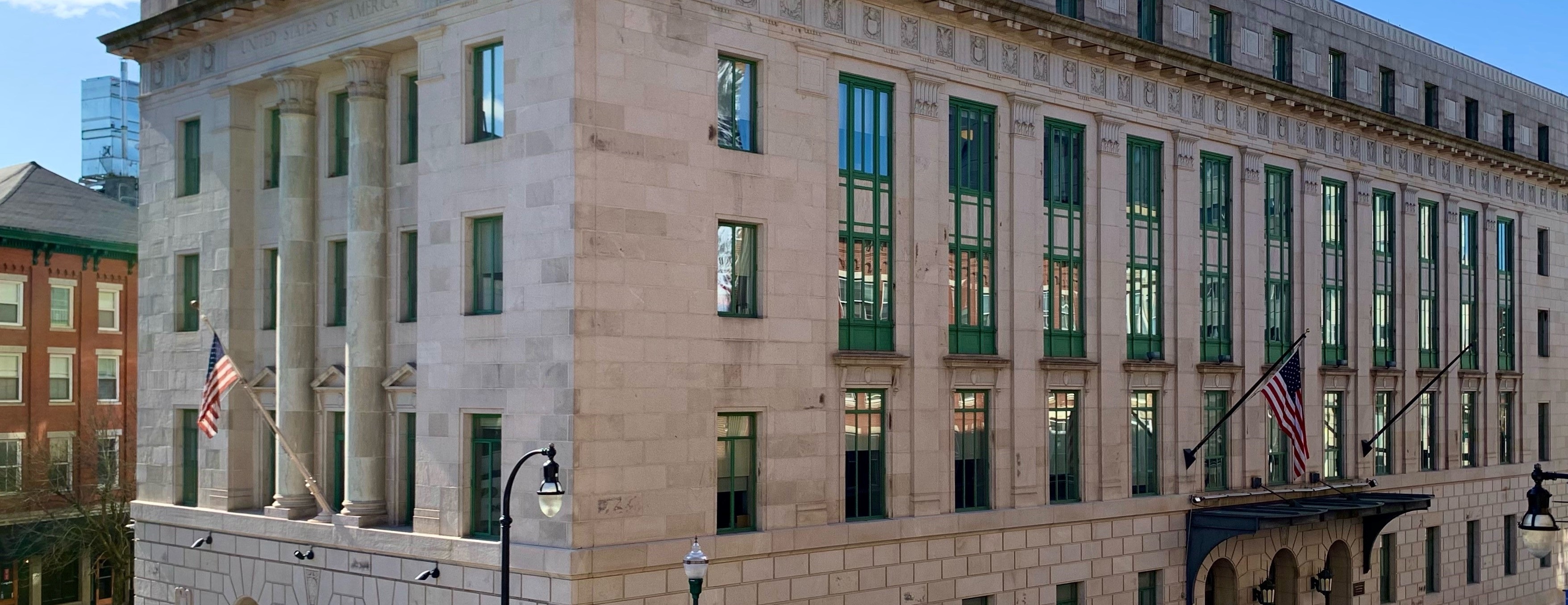
Harold D. Donohue Federal Building and U.S. Courthouse - Worcester, MA

Courtroom Technology

Contact the courtroom clerk regarding the use of technology in the courtroom. View our courtroom technology page for more information on the technology that is available.

Internet access is available upon request and with the consent of the presiding Judge. Click here for more information.


Staff
USDC Judicial Forum Survey

Civil - Case Management

Q5: What, if any inquiries do you make about the likelihood of trial at the initial scheduling conference?

A5: I do not inquire; however, the Court benefits when the parties are up front as early as practicable if they believe the case will not require a trial.

Q6: What schedule do you set at the initial scheduling conference?

A6: I review the proposed scheduling order, and set all dates through summary judgment deadlines.

Q7: After the initial scheduling conference, do you hold status conferences?

A7: I always schedule a status at the close of fact discovery.

Q8: If so, when do you hold status conferences?

A8: After the status at the close of fact discovery, statuses are scheduled on an as-needed basis, and often one will be scheduled close to summary judgment filings being due. The parties should move for a status to be scheduled if they have a question for the Court.

Q9: If so, what issues do you address at status conferences?

A9: Status conference topics may include progress in discovery, anticipated issues with experts, previewing whether dispositive motions will be filed, length of any possible trial, referral to mediation, and setting trial dates.

Civil - Discovery

Q11: What, if any, issues related to electronically stored information should counsel be prepared to address at the initial scheduling conference?

A11: Parties should put the Court on notice if they anticipate needing a protective order or confidentiality agreement.

Q12: If the parties intend to file a proposed protective order, do you require any particular format and/or a specific time for doing so?

A12: Any motion for protective order must include a proposed order as an exhibit to the motion.

Q13: Under what circumstances would you consider a bifurcation of discovery?

A13: Bifurcation of discovery would be fact-specific and dependent on the needs of a case. For example, I recently considered bifurcating discovery to address a threshold, disputed issue of arbitrability, but the case was ultimately voluntarily dismissed.

Q15: Other than the requirement that the parties confer in good faith to narrow the issues before filing any discovery motion under Local Rule 37.1(A), what, if any, additional requirements do you make of counsel before considering discovery motions?

A15: In some especially contentious cases, I require counsel to submit a joint statement of discovery disputes. For example: DISCOVERY DISPUTE RESOLUTION ORDER: As discussed on the record, [ECF No. 131], the parties are expected to expeditiously resolve discovery disputes without filing motions to compel. If the parties cannot resolve a discovery dispute and Court intervention is required, the parties shall file a joint statement not exceeding fifteen (15) pages in length setting forth (1) the current status of discovery; (2) the nature of the dispute; (3) the efforts made by the parties to resolve the dispute; (4) the position of each party regarding the dispute, including relevant case law and authorities; and (5) a certification under L.R. 7.1(a)(2) and L.R. 37.1(b) signed by counsel for each party that they have met and conferred in good faith to resolve the dispute. The parties must cooperate in drafting the joint statement and expeditiously provide their respective contributions for consolidation. The Court is available to resolve disputes pursuant to this mechanism as they arise, provided that the requirements (1–5) outlined above are met. Discovery motions must be filed in sufficient time for the Court to decide the motion before the deadline for the completion of discovery. If oral argument is ordered, counsel is encouraged (but not required) to provide junior lawyers with the opportunity to participate in oral advocacy. The Court encourages parties to seek intervention pursuant to this mechanism as necessary.

Q16: Typically, do you resolve discovery motions or do you refer them to the magistrate judge?

A16: Depends on the case, but I will often refer discovery motions to the magistrate judge.

Q17: Do you typically hold a hearing on discovery?

A17: I will typically hold a hearing on a discovery motion, such as a motion to compel.

Q18: Please describe your general practice regarding the resolution of discovery motions.

A18: I treat discovery disputes as an opportunity to facilitate a focused, practical dialogue about the specific requests at issue. When parties are in disagreement over interrogatories or document requests, I am willing to devote the time necessary to address each disputed request in turn and to hear from both sides. As the discussion progresses—and as I provide guidance and rulings—the parties are often able to refine their positions and focus on discovery that is truly probative of the merits.

Q19: Under what circumstances will you consider emergency motions regarding discovery matters?

A19: When there’s alleged abuse, misconduct, or a possibility of spoliation.

Q21: What, if any, expert discovery deadlines do you set at the initial scheduling conference? When do you typically set a schedule for the filing of Daubert motions?

A21: Typically, I will adopt the proposed deadlines if they appear reasonable and leave it to the parties to bring disputes to the Court if any arise. In my view, it’s not always the best use of resources to pressure test expert deadlines prior to the motion to dismiss.

Civil - Dispositive Motions

Q23: Other than the presumptive pages limits for memoranda under Rule 7.1(b), do you have any other requirements or preferences about the filing of dispositive motions?

A23: For summary judgment, I have particular requirements. I have a standing order on summary judgment that covers everything and I advise litigants to review that closely.

Q25: Do you typically allow reply briefs and/or surreply briefs?

A25: Summary judgment motions may have a reply within seven (7) days of the filing of the opposition. A surreply may be filed only with leave of the Court. For motions to dismiss, reply briefs may be filed with leave of the Court.

Q26: If you allow reply and/or surreply briefs, do you impose a page limit?

A26: Usually 5 pages, but parties can seek a longer page range upon motion to the Court.

Q27: Do you typically hold a hearing on motions to dismiss?

A27: I consider holding a hearing for a motion to dismiss on a case-by-case basis.

Q30: Under what, if any, circumstances, would you allow the filing of post-argument briefs?

A30: If there is an issue raised at the hearing, or if I indicate that I would like more information about a topic or case discussed, I will inform the parties that I would like post-argument briefs, usually in the form of show cause order.

Civil - Patent Cases

Q33: Do you have particular practice about Markman hearings? If so, please describe them including but not limited to whether you allow tutorial(s).

A33: No particular practice, and I do allow tutorials. I also allow the submission of video tutorials. I encourage video tutorials which will be filed and made part of the record. File a courtesy copy of the video tutorial three business days in advance of the hearing.

Criminal Matters

Q35: Do you have any particular practices as to scheduling in criminal cases? If so, please describe them.

A35: I do not have a particular practice; however, I endeavor to promptly resolve all criminal matters and expect attorneys to progress through the case without delay.

Q38: Do you have any particular practices regarding the filing of suppression motions or hearings on suppression motions?

A38: I do not have any practice regarding filing, but I do usually hold a hearing on a motion to suppress.

General Trial Practice - Pretrial Matters

Q39: Do you require the filing of a trial brief?

A39: Yes - I have a detailed pretrial procedural order that goes out in every case once a trial date is set. A template version is available on the Court website.

Q41: Do you typically hold an initial pretrial conference in criminal cases? If so, what issues do you want counsel to be able to address at each conference in addition to those addressed under Local Rule 117.1(a)?

A41: Yes, in addition to the requirements in Local Rule 117, I want the parties to discuss likelihood of trial, length of trial estimate, and anticipated issues regarding witnesses or evidence.

Q43: When do you set a deadline for the filing of proposed voir dire, proposed jury instructions and/or special verdict form, witness and exhibits lists, motions in limine? Typically, how far in advance of trial are these deadlines?

A43: I have a very detailed pretrial order that provides all the deadlines in terms of weeks from the start of trial. The template standing order appears on the District website, and the parties will receive a version of it that is specific to their case once a trial date is set.

Q44: Do you require that proposed voir dire, verdict forms and/or jury instructions be filed in any particular form (i.e., courtesy electronic copy to your deputy clerk in Word or WordPerfect format, etc.)?

A44: Please review the pretrial standing order. Witness lists, requests for voir dire, verdict forms, and jury instructions must be filed on the docket as well as sent as a word document to the Courtroom Deputy.

Q47: Do you typically resolve motions in limine at the final pretrial conference?

A47: Any motions in limine that may come up in opening arguments will be resolved at the pretrial conference. While I endeavor to resolve motions in limine at the final pretrial conference, there are often motions that must be considered in context, so I defer a ruling or set some guidelines before ruling later when the issues arises at trial.

Q48: Do you typically hear and/or resolve Daubert motions at the final pretrial conference?

A48: I prefer to hear and resolve Daubert motions before the final pretrial conference in a separate hearing.

Q49: Do you require the parties to provide a courtesy copy of trial exhibits to the Court before trial?

A49: All exhibits must be submitted to the Courtroom deputy three (3) days prior to the start of trial on a single joint CD. If the parties choose to prepare physical evidence binders, the parties should prepare 2 courtesy copies of documentary trial exhibits for the Court – one for the Judge and one for the clerks.

Q50: If courtesy copies of trial exhibits are required, when do you require them?

A50: Courtesy copies may be provided on the first day of trial and amended by the parties, as needed.

Q51: If courtesy copies of trial exhibits are required, what particular form is required?

A51: Trial exhibits that are printed must be binded in a three-ring binder and tabbed/ordered with a number for each exhibit.

Q52: Do you require trial exhibits to be pre-marked? If so, please describe your practice?

A52: Yes. All of the trial exhibits must be pre-marked and submitted to the Courtroom Deputy in numerical order, whether the exhibits are used or not.

Criminal - Scheduling Trials

Q53: Typically, when do you set a trial date in criminal cases?

A53: If there are no pretrial evidentiary hearings, then I set the trial date at the initial pretrial conference.

Q54: Typically, when do you set a trial date in civil cases?

A54: Depending on the age of the case, I typically set a trial date after any dispositive motions are resolved (or after the deadline for filing such motions has passed). If the case is older than two years, I may set a trial date to occur within a few months of the dispositive motion deadline.

Q55: What is your typical trial schedule?

A55: The first two days are usually full days, especially for voir dire. The remaining days will mostly be half days (9AM – 1PM), unless there is cause to have a full day (such as to accommodate a witness from out-of-town, or complete testimony on a specific topic)

Criminal - Jury Selection

Q57: Please describe your jury selection process.

A57: Parties may submit proposed questions for voir dire and I review their submissions and draft one set of general voir dire questions. These questions will normally be discussed at the final pretrial conference. On the day of empanelment, I usually use two courtrooms for jury selection. The entire jury pool will start in Courtroom 2 for the initial general voir dire questions. Once the general voir dire concludes, we send the qualified panel into Courtroom 1. Then, we call potential jurors into Courtroom 2 one by one for individual voir dire and peremptory challenges. I will conduct individual voir dire based on the potential juror’s responses to the general questions. Attorney follow up questions may be allowed, if relevant. I will make strikes for cause, if appropriate. Peremptory strikes must be made in the moment, juror by juror, not at the end of questioning the entire pool.

Q58: Under what circumstances, if any, have you or would you consider using a juror questionnaire?

A58: I would consider a questionnaire in extremely complex or high-profile case (i.e., a case in which there has been much pretrial publicity) or when the subject matter is extremely sensitive, such as child sexual abuse.

Q59: If you would consider the use of a jury questionnaire, when and in what form should it be proposed?

A59: Parties should file a proposed questionnaire along with their trial brief.

Q60: Have you or would you consider allowing attorney voir dire?

A60: I allow attorney-conducted voir dire only as follow up to general voir dire questions.

Q61: In civil trials, typically what number of jurors do you seat?

A61: I usually seat 8 jurors in civil trials.

Q62: In criminal trials, typically how many alternate jurors do you seat?

A62: 2-4 depending on the season. If close to a vacation week or during cold/flu season, usually 4 alternates.

General Trial Practice - Trial Practices

Q64: How many rounds of examination do you typically allow?

A64: Usually Direct & Cross as well as Redirect. I allow Recross, as needed.

Q65: Under what, if any, circumstances, will you allow a rebuttal case?

A65: I only allow a rebuttal case on the rare instance if counsel could not have reasonably anticipated an issue arising during the defense case.

Q67: Do you have any particular practice in regard to jury charge conferences? If so, please describe it.

A67: I have very particular practices on jury charge conferences. I endeavor to have a first draft of final jury instructions for the parties 2-3 days before the close of evidence. At this point, the document is circulated to the parties for their review. The plaintiff or government will review first, and must make any objections, deletions, or additions in tracked changes. The parties should make a brief statement of their argument for any alterations in a comment bubble in the word document. The plaintiff/government will usually have 1-2 days to review the document and enter their changes. The defendant(s) should be reviewing the instructions during this time as well. Then, the plaintiff/government will send the marked up document to the Court and defendant(s) via email. The defendant(s) will then have about 1 day to enter their changes/comments/responses in the same word document using track changes and comments. The Court will then take the document that is marked up by both sides and make preliminary rulings on the edits. This document with preliminary rulings will be shared and printed for the parties to discuss at the Charge Conference.

Q70: If you have any preferences or practices about pretrial or trial matters that has not been solicited by the prior questions, please describe them here.

A70: The parties are directed to closely review procedural or standing orders that are docketed in their cases, particularly for sentencing and trial matters.

Q71: If you have any particular practices as to bench trials, please describe them here.

A71: Proposed findings of fact and conclusions of law will always be required in a bench trial.

Criminal - Sentencing/Revocation Hearings

Q72: Do you require a sentencing memorandum in every case?

A72: Any sentencing memorandum must be filed 7 days before the date of the sentencing hearing. While a sentencing memorandum is not required, if counsel does not intend to file one, they must notify the Court via email or docket entry that they will not be filing a memo 7 days before the date of the sentencing hearing. This requirement is laid out in my standing order on sentencing.

Q73: If you do not require a sentencing memorandum in every case, when would it be helpful to you?

A73: The sentencing memorandum is always helpful to the Court and counsel forgo an opportunity for advocacy for their client if they choose not to file one.

Q74: Under what, if any, circumstances, would you consider an expedited sentencing?

A74: Expedited sentencing may occur on a case-by-case basis. If the ultimate sentence is close to the time already served, then I would definitely want to consider expedited sentencing. If a party wants a sentencing hearing within 4 weeks of a Rule 11 hearing, they may proceed faster if their client knowingly and voluntarily waives an interview or objections to the presentence report.

Q75: Do you have any particular practices regarding the presentation of victim impact statements at sentencing?

A75: No, but the Government should provide notice to the Court if they intend to offer a victim impact statement, as well as how the statement will be made. The Court’s preference is for the statement to be made on the stand; however, not under oath.

Q77: Do you have any particular practices as to revocation matters?

A77: Counsel should notify the Court if the defendant intends to stipulate to any of the violations. The Government and U.S. Probation should notify the Court if they are seeking an imposition of a term of imprisonment.

Standing Orders & Miscellaneous Matters

Q81: If there is any other guidance about your court practices and preferences that you would like to share with counsel that has not been solicited by any of the prior questions, please provide it here.

A81: Counsel shall not assume a motion for a continuance will be granted. If the Court hasn't ruled, counsel shall contact the courtroom deputy. Last minute requests to continue short of a true emergency are disfavored.

Post-Pandemic Practices

Q82: As of Fall 2022, are there any case events that you routinely conduct via Zoom in civil cases? If so, what are they?

A82: Status conferences and scheduling conferences are generally conducted on zoom.

Q83: As of Fall 2022, are there any case events that you routinely conduct via Zoom in criminal cases? If so, what are they?

A83: Status conferences and scheduling conferences are generally conducted on zoom.

Q84: As of Fall 2022, if there are case events that you routinely conduct in person that you would consider conducting via Zoom, what are those case events and under what circumstances would you consider conducting them via Zoom?

A84: I may consider conducting case events other than status or scheduling conferences on zoom if the case involves an unusually large number of attorneys or parties, if the attorneys are from out-of-state and the matter is not dispositive, or to accommodate travel plans, upon request.